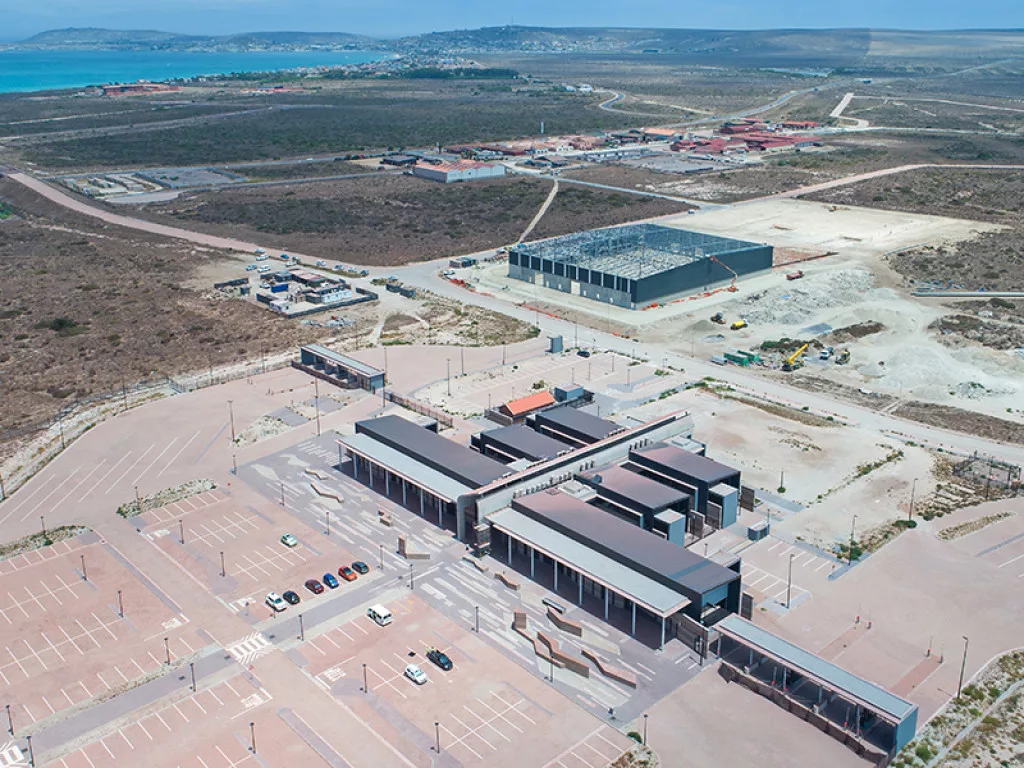
Africa's Next Generation of Industrial Zones
Why successful SEZs must move beyond infrastructure and incentives to become integrated investment platforms.

Across Africa, governments are again placing industrialisation, manufacturing and value addition at the centre of economic strategy. Special Economic Zones (SEZs), industrial parks and economic corridors are increasingly being used to concentrate infrastructure, attract investment and create platforms for export-oriented growth.
The ambition is significant. South Africa, for example, has announced a drive to mobilise R750 billion through its SEZ network, targeting sectors ranging from automotive manufacturing and critical minerals beneficiation to green hydrogen, pharmaceuticals, agro-processing and logistics. Yet the scale of ambition also highlights the central question: what separates a designated zone from a competitive industrial ecosystem?
Experience across African markets suggests that designation, incentives and serviced land are necessary, but rarely sufficient. The next generation of industrial zones will need to start with a credible commercial proposition, align infrastructure with target industries, attract anchor investors, connect to regional value chains and operate through institutions capable of repeatedly converting strategy into investment.
The strategic question
How can African countries move from establishing zones to building industrial platforms that attract capital, support competitive industries and generate sustained economic activity
The SEZ model is evolving
SEZs have long been used to overcome constraints in the wider business environment by providing concentrated infrastructure, simplified administration and targeted incentives. But the competitive benchmark is changing.
Investors increasingly assess locations as complete operating ecosystems. Reliable power and water, efficient logistics, access to skills, regulatory certainty, supplier depth and proximity to markets can matter as much as fiscal incentives. A zone that performs well inside its boundary but remains disconnected from ports, rail, energy systems, suppliers or customers may still struggle to compete.
This is particularly relevant in Africa, where industrial policy is re-emerging as a strategic priority. The World Bank's 2026 Africa Economic Update argues for an ecosystem-based approach to industrial policy, linking priority sectors to infrastructure, skills, finance and regional markets. The implication for SEZs is clear: zones cannot be treated as isolated property or infrastructure developments.
1. Start with the commercial proposition, not the land
The first question should not be where land is available. It should be which industries can compete from the location, why investors would choose it, and what specific constraints the zone can remove. Target-sector selection needs to reflect demand, feedstock availability, logistics, skills, energy intensity, customer proximity and export potential.
2. Design infrastructure around the industries being targeted
Infrastructure should follow the industrial strategy. A mineral-beneficiation cluster, automotive ecosystem, agro-processing zone and pharmaceutical hub have fundamentally different requirements for power, water, logistics, waste management, skills and supporting services. Generic infrastructure risks creating capacity without competitiveness.
3. Anchor investors create ecosystems
Successful zones are rarely built around a long list of hypothetical tenants. Anchor investors can create the demand certainty required to justify infrastructure, attract suppliers, deepen skills and establish market credibility. The development strategy should therefore identify which investors or industrial clusters can provide the nucleus around which a broader ecosystem can form.
4. Think beyond the zone boundary
Industrial competitiveness increasingly depends on regional systems. Inputs may originate in one country, processing may occur in another, and export gateways may sit hundreds of kilometres away. The Lobito Corridor illustrates the growing importance of linking strategic resources, transport infrastructure, financing and cross-border markets into a wider investment proposition.
The six building blocks of a competitive industrial zone

From zone development to investment platform
The strongest SEZs should ultimately function as investment platforms rather than one-off development projects. This means creating a repeatable mechanism through which priority industries are identified, infrastructure is sequenced, investors are attracted, financing is mobilised and operating constraints are continuously addressed.
This changes the measure of success. The question is not simply whether infrastructure has been built or land has been allocated. The relevant measures are whether productive investment has been mobilised, whether firms are competitive, whether local and regional value chains are deepening, and whether the platform can attract subsequent waves of investment without being redesigned from first principles each time.
Implications for African policymakers, zone operators and investors
- For policymakers - Treat SEZs as instruments of industrial strategy. Concentrate scarce resources where a credible sector proposition, investor pipeline and implementation capability exist.
- For zone operators - Shift from property development towards active ecosystem management, investor facilitation and cluster development.
- For investors - Assess the wider operating ecosystem, not only the incentive package. Infrastructure reliability, logistics, supplier depth and institutional execution determine long-term competitiveness.
- For development finance institutions - Link zone financing to credible industrial demand, anchor investment and wider corridor or value-chain development rather than standalone infrastructure.
What this means for Africa's next industrial growth cycle
Africa's opportunity is not to replicate the first generation of export-processing zones. It is to build industrial ecosystems that connect the continent's resource base, growing markets and strategic location with competitive manufacturing, value addition and regional trade.
The most successful zones will therefore be those that make deliberate choices. They will focus on sectors where the location can compete, build infrastructure around real industrial requirements, secure anchor demand, integrate with regional value chains and create institutions capable of sustained execution.
The next generation of African SEZs will be judged less by the hectares designated and more by the productive investment, competitive industries and repeatable growth platforms they create.
Frost & Sullivan Africa perspective
Frost & Sullivan Africa has supported industrial-zone and economic-development initiatives at multiple levels, including country-level strategy and institutional design, master planning of individual zones alongside specialist partners, and the assessment of individual investments across multiple industries. This experience reinforces a consistent conclusion: successful zones require commercial strategy, infrastructure planning and investor activation to be designed as one integrated system.

Source:
• Department of Trade, Industry and Competition (South Africa), 2026: Spatial Industrial Development Strategy and SEZ implementation updates.
• World Bank, 2026: Special Economic Zones in South Africa 2026 - Policy Review.
• World Bank, 2026: Africa Economic Update - Making Industrial Policy Work in Africa.
• Frost & Sullivan Africa / Hendrik Malan, 2026: Africa Opportunity posts on South African SEZ investment and the Lobito Corridor.
__________________________________________________________________________________
For more information about opportunities in Africa, please contact:
Media Contact - Africa
📧 Rebecca.Mabika@frost.com
📞 +27 21 680 3260